China’s military diplomacy in the Pacific and Indian Oceans

Soldiers of the Chinese PLA

China’s military diplomacy and security engagement has evolved over time

China’s use of military diplomacy and security engagement has evolved significantly over the past five decades. Unpacking this evolution helps to unpack the dramatic transformation that China has undertaken, understand the context that China’s security agencies operate within today and appreciate trends that we may see continue in the future.

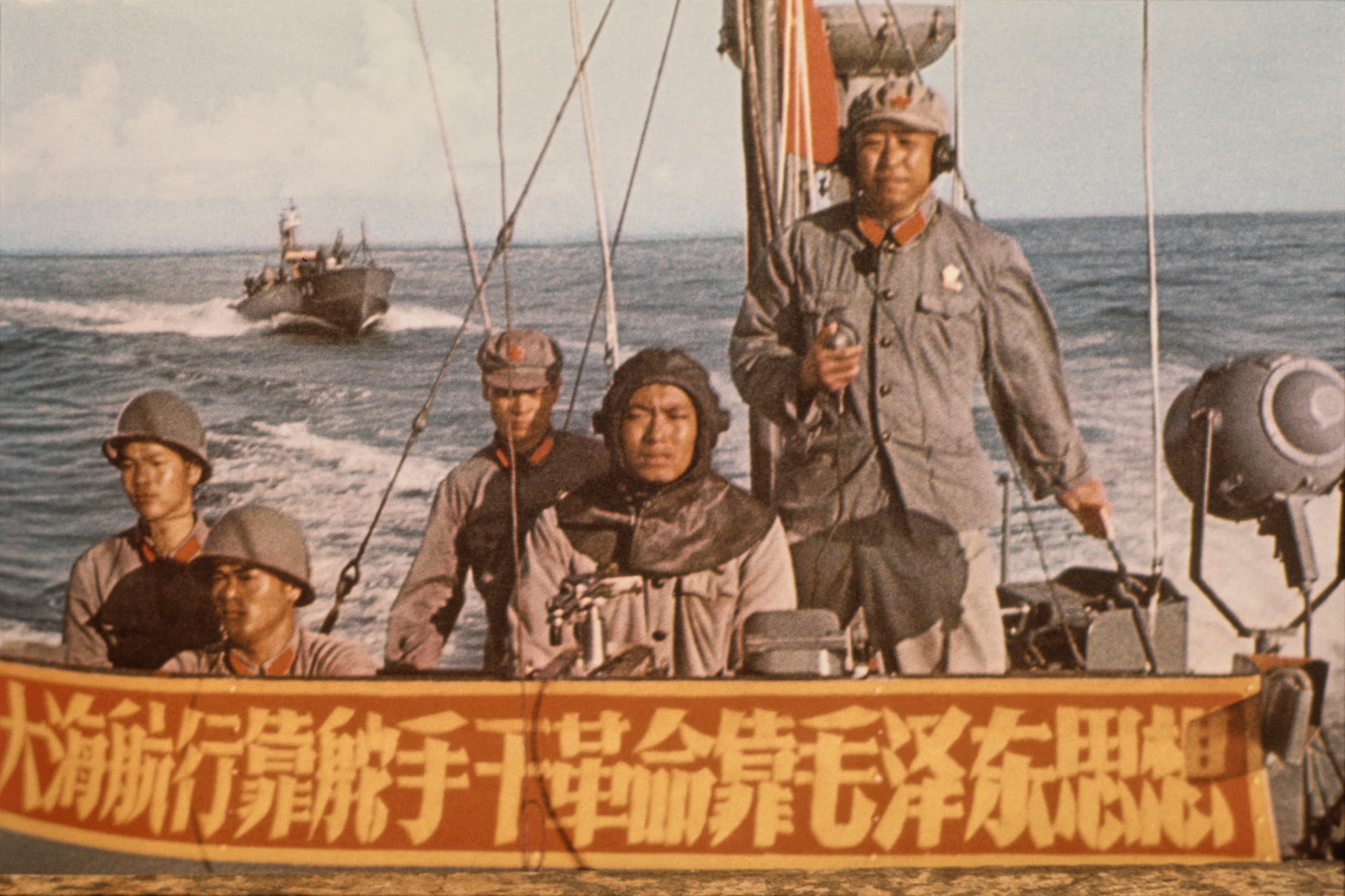
During the Mao era, the China’s military had little to no meaningful security engagement with foreign countries. The PLA was primarily inward-focused, prioritising its domestic political role over external functions. Its engagement with other countries’ armed forces was limited, especially following the Sino–Soviet split in 1960 and during the Cultural Revolution (1966–1976).

This trajectory began to shift in the late 1970s under Deng Xiaoping. As China opened to the world and prioritised economic development, the PLA was directed to adopt a less political and more outward-facing posture. Defence and security organisations embarked on cautious engagement with foreign partners, largely for diplomatic reassurance and to support China’s reintegration into the international system.

Yet the PLA’s institutional culture and limited capabilities constrained the scope of these efforts. Secrecy, concern about exposing weaknesses, and a focus on avoiding embarrassment meant most interactions took the form of high-level visits, ceremonial activities, or carefully curated demonstrations. China’s lack of power-projection capacity also restricted opportunities for substantive exercises, overseas deployments, or naval port calls.

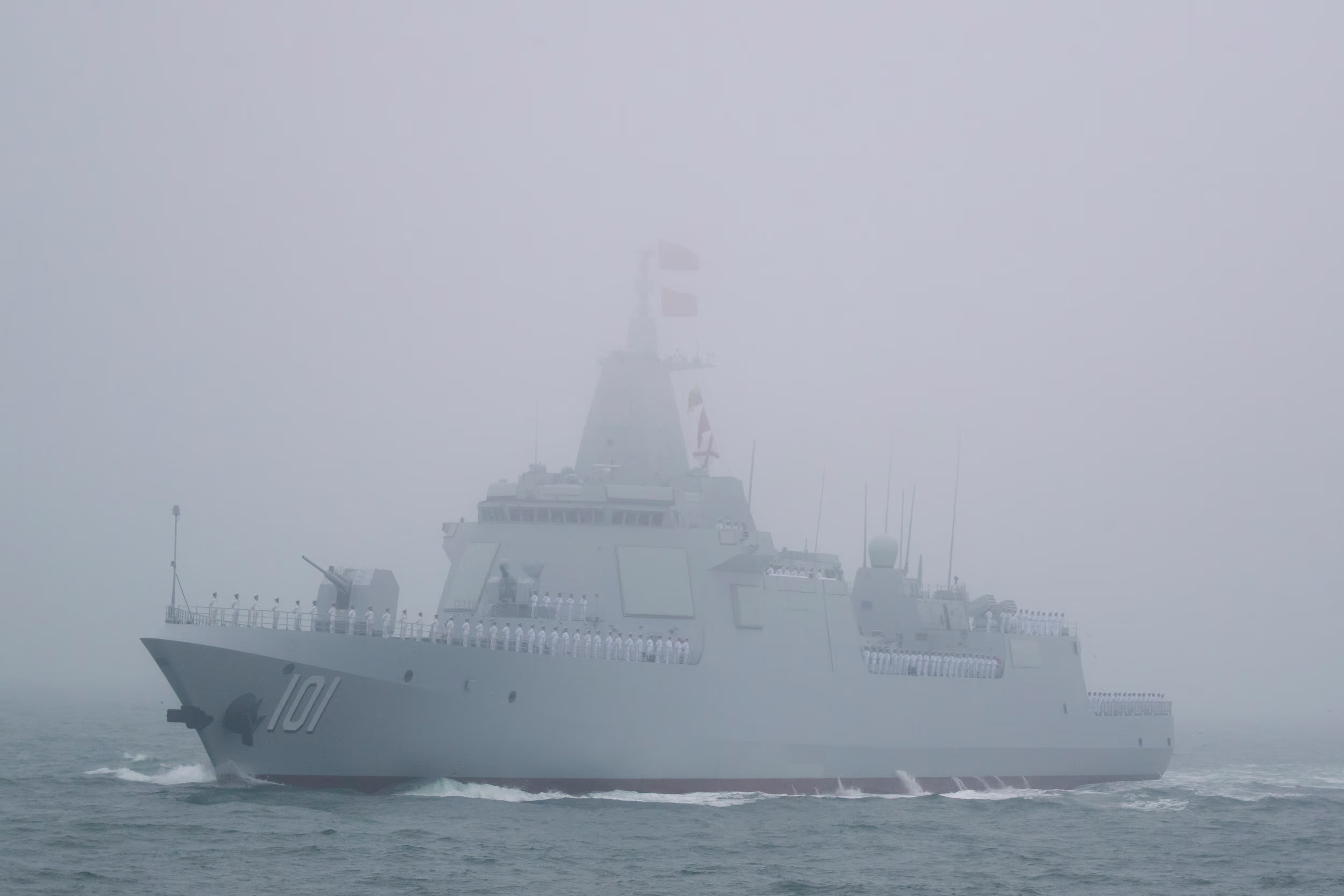
Over time, improvements in China’s military capability, confidence and global ambition reshaped the role of military diplomacy. What began as a supporting instrument for national development and broader foreign policy gradually evolved into a tool for influence-building and operational engagement. By the early 2000s, and especially under Xi Jinping, military diplomacy had become an explicit mechanism for projecting Chinese hard and soft power, shaping regional security environments, and safeguarding overseas citizens and investments.

Chinese leaders on defence and security engagement

We can see how different Chinese leaders have framed the role of defence diplomacy and security engagement, and how this has helped to advance China’s foreign policy and strategic objectives:

1978 – 1992

Deng Xiaoping

Deng framed defence activity as subordinate to economic development and diplomacy. The PLA was tasked with supporting a favourable external environment for national development. This rhetoric stressed reassurance and non-adventurism and avoided claims of overseas basing or power projection.

Deng’s approach opened space for limited defence exchanges that helped normalise diplomatic ties. Activities included modest officer exchanges, goodwill ship visits and technical assistance. China did not conduct any sustained overseas deployments.

1992 – 2002

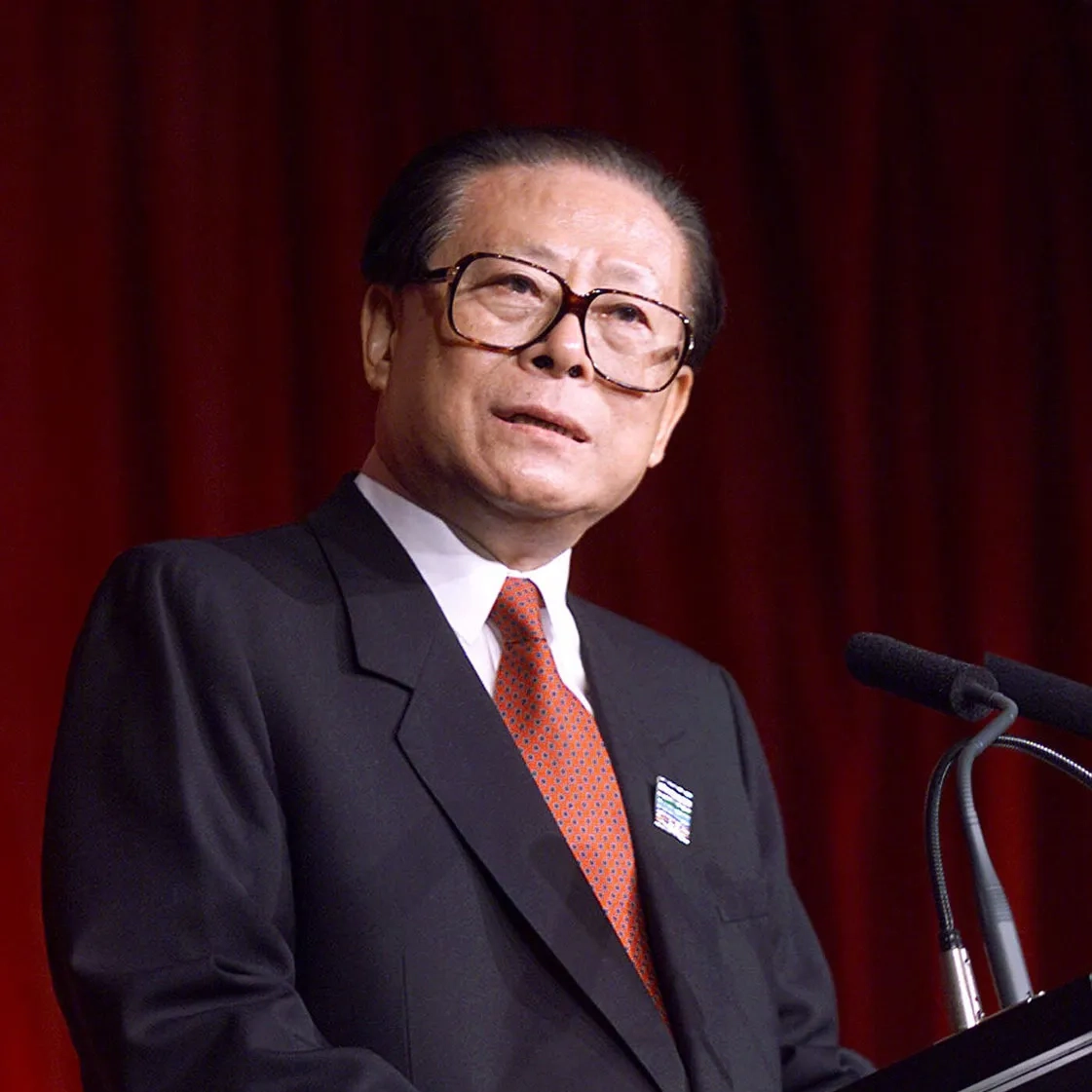
Jiang Zemin

Jiang emphasised “peaceful coexistence” and military diplomacy as part of China’sdiplomacy. He focused on transparency, confidence-building, and institutionalengagement. Strategicdocuments in this period reiterated China’s defensive posture.

This helped reassure neighbours after eventsof 1989 and supported China’s integrationinto regional security institutions. During this time China expanded its attaché networks and conducted more port calls. Early contributions were made to UNpeacekeeping missions and the PLA started to conduct training exchanges with partners.

2002 – 2012

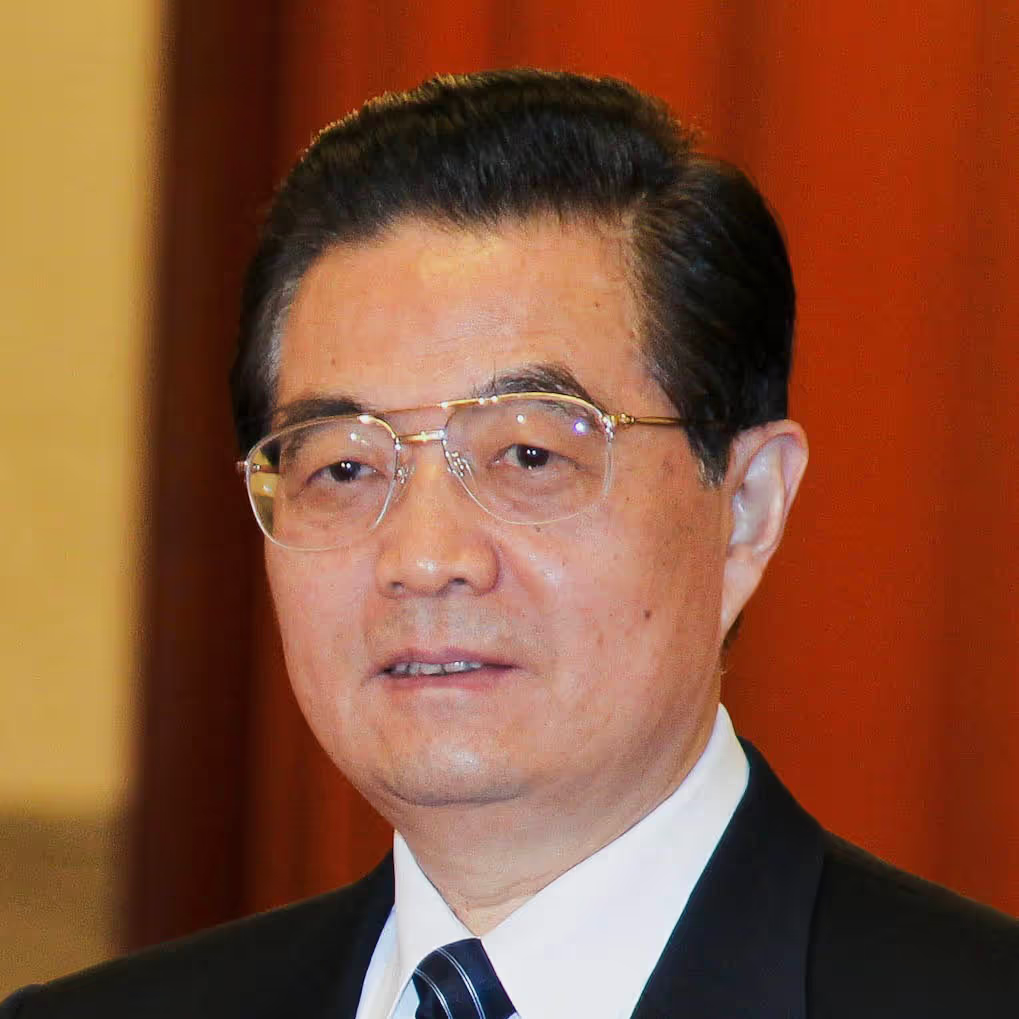
Hu Jintao

Hu introduced and institutionalisedthe language of “diversifiedmilitary tasks” with the PLA undertakingpeacekeeping, humanitarian assistance and disaster relief (HADR), anti-piracy,and non-combatant evacuation activities. Leaders cast these as contributions tointernational security and protection of China’s growing overseas interests.

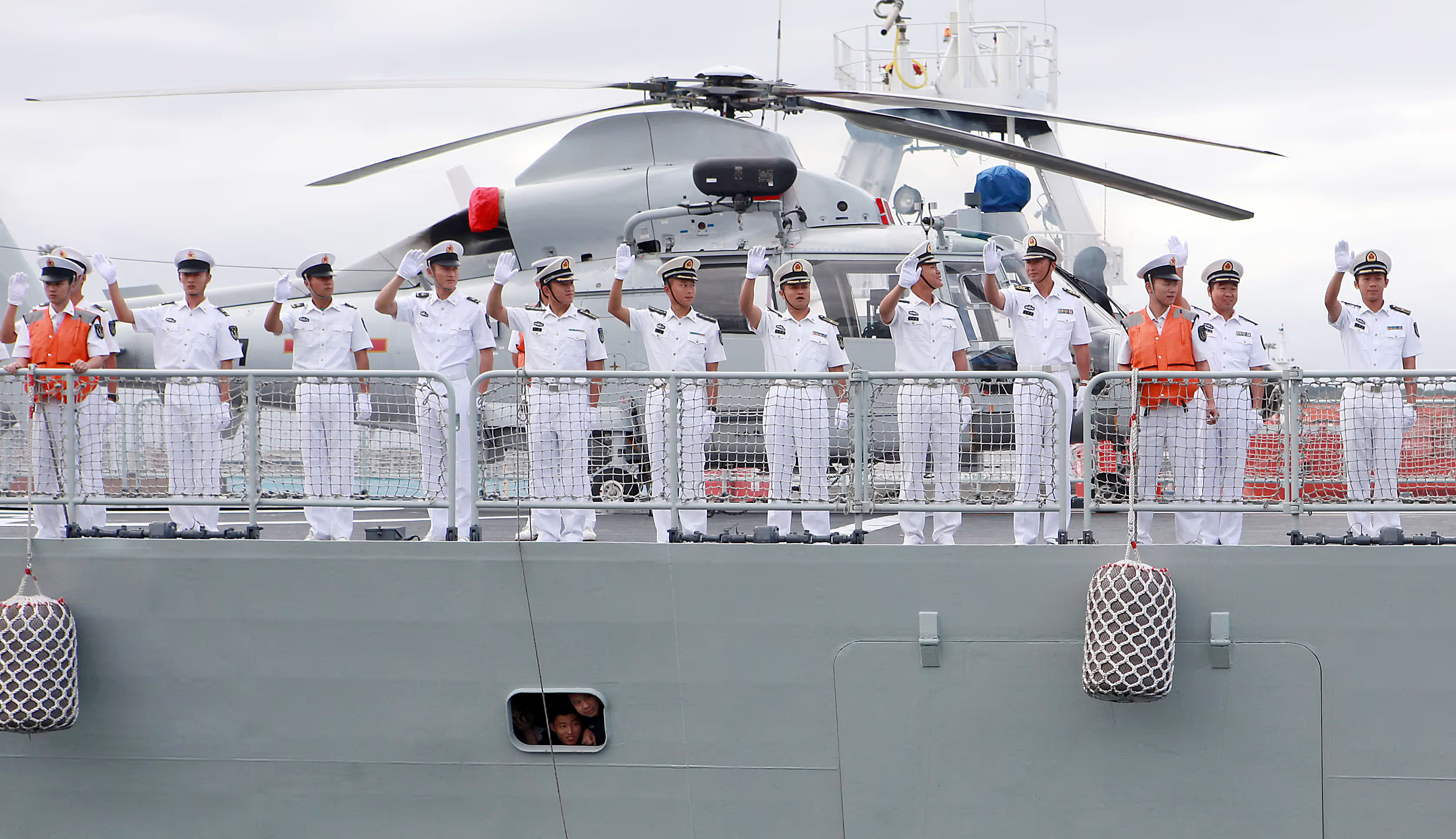
Framing PLA-N operations as global public goods helped to justify China’s far-seasdeployments politically and diplomatically. In 2008 the PLA-N begananti-piracy deployments to the Gulfof Aden which opened space for new logistics and port-access arrangements.

2012 – present

Xi Jinping

Xi’s frames military diplomacy as a central component of state diplomacy. The PLA must expand strategic presence, “tell China’s military story well,” and improve the ability to safeguard China’s overseas interests.

During this period, the PLA has sought to normalise overseas basing, conduct blue-water operations and expand security agreements. China has opened its first overseas military base in Djibouti, sent regular PLA-N task groups in the Indian Ocean and Pacific, expanded military/police training and security assistance in Pacific island states, and deepening access relationships across the Indian Ocean.

China’s Indo-Pacific security engagement evolved across four distinct periods

China’s Indo-Pacific military and security activities have changed across four distinct periods: the largely inactive Mao era; the gradual build-up from the late 1970s to the early 2000s; the expansion from the mid-2000s to 2016; and the assertive, wide-ranging engagement that has characterised China’s approach since 2016.

Period 1: Mao era (pre-1976)

Minimal activity

Pacific Islands

Almost no PLA engagement.

Indian Ocean

No PLA-N deployments; relations limited to political diplomacy with select South Asian partners.

Australia & NZ

Diplomatic relations open from mid-1970s; minimal military exchanges.

Period 2: Late 1970s – early 2000s

Build-up of defence diplomacy and normalisation

Pacific Islands

PLA provides non-lethal military aid, conducts officer training, early PLA-N port calls and goodwill visits. Competition with Taiwan shapes outreach.

Indian Ocean

China establishes diplomatic ties across the region. The PLA conducts arms sales (Pakistan, Sri Lanka) and strategic interest in sea lanes grows, but no PLA deployments.

Australia & NZ

The PLA institutionalises defence dialogue, conducts port visits and officer exchanges.

Period 3: Mid-2000s – 2016

Operational expansion

Pacific Islands

The PLA conducts more frequent port calls, engages in HADR assistance (e.g. 2004 tsunami), capacity building and training. The PLAs profile steadily increases.

Indian Ocean

The PLA begins Gulf of Aden anti-piracy deployments in 2008, marking its first sustained far-seas operational campaign. It establishes port access/logistics arrangements.

Australia & NZ

High levels of engagement continue but strategic unease grows as the PLA modernises. The PLA conducts more complex exercises and maritime interactions.

Period 4: 2016 – present

Assertive expansion, basing, and routine blue-water diplomacy

Pacific Islands

The PLA intensifies security assistance through police/military training, large equipment donations and more frequent PLA-N port calls. The Solomon Islands security agreement (2022) and outreach in Vanuatu raises the prospect of basing or extended access.

Indian Ocean

The PLA establishes a support base in Djibouti (2017). China’s expands access arrangements (Gwadar, Hambantota), conducts regular long-range patrols, joint exercises, and evacuations (Libya, Yemen). PLA-N rotations and surface action groups operate year-round.

Australia & NZ

There is sharp reduction in defence cooperation with Australia during China’s 2020–2023 diplomatic freeze. China begins a regular frequency of contested maritime interactions. PLA-N task grounds begin to circumnavigate Australia.

China’s excessive claims and sensitive areas