China’s military presence in the Indian Ocean Region (IOR) has been growing. Beijing has enhanced its presence in the region through the establishment of bases despite its public criticism of US presence in the previous decades. Some of these Chinese establishments are dual-use facilities, strengthening China’s logistics and intelligence networks.
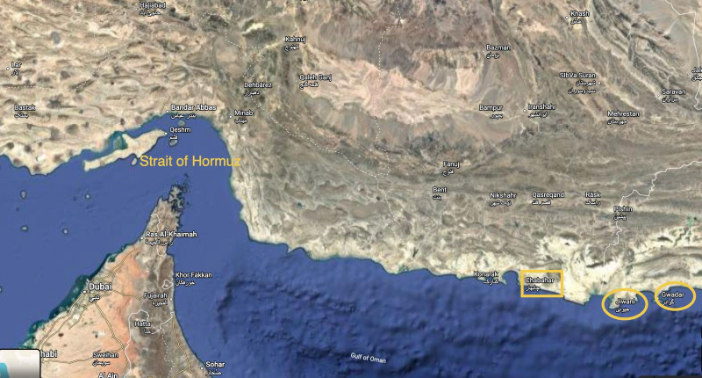
Rather than a complete listing, this section is a selective examination of China’s footprint in the IOR. Below are China’s current military/dual-use establishments in the IOR: Djibouti, Gwadar, Jiwani and Hambantota. The details on these establishments are not comprehensive, but they are intended at demonstrating China’s growing efforts at naval/dual-use facility expansion. Very little is seen in the media about the Jiwani naval base in Pakistan, except for a few reports in 2018, but given its strategic location close to Gwadar, Chabahar and the Strait of Hormuz, this is a port that China will likely eventually develop into a military facility. It is likely that China will develop more facilities in the region in the coming years, but these are some of the currently known ones.
Djibouti
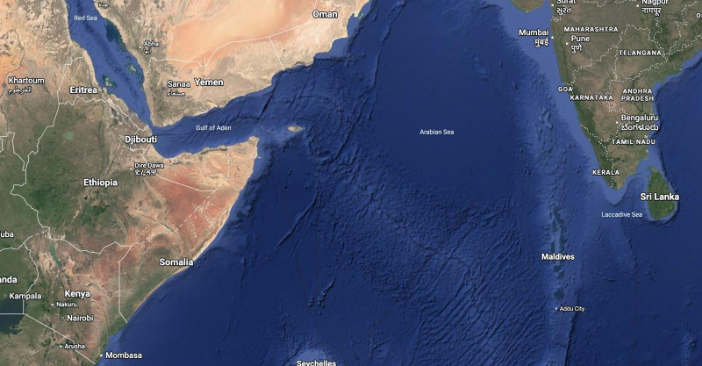
Djibouti is located in the Horn of Africa, across the Red Sea from Yemen, which makes it strategically vital. This was China’s first overseas military base, announced in 2015. The base is located at Doraleh and according to Chinese Ministry of Defence, it supports counter-piracy operations as well as humanitarian relief and peacekeeping operations. When it was announced, Chinese spokesperson stated that they needed the base because of the large number of escort missions that the Chinese navy conducted in the region, which required support facility for logistics. Analysts also note that the Djibouti facility can aid intelligence gathering. The base is reported to be able to host up to 10,000 troops, though only a few hundred seem to be currently stationed.
The construction of the base began in 2016, at a cost of approximately US$590 million. A number of Chinese warships including Changbai Shan, a large Type-71 amphibious landing ship has been spotted at the port. Other significant visits include Chinese naval hospital ship, Peace Ark, which completed a seven-day “Mission Harmony” in December 2024. This is an example of the PLA engaging in military/medical diplomacy with the ship providing medical support to the local population. The most recent PLA-N mission is the 48th Naval Escort Group which started in November 2025. It includes the Type-52DL Guided Missile Destroyer Tangshan and Type-54A frigate Daqing. This mission is likely to last about ten months. It took over from the previous 47th Naval Escort Group, which included Type-52 Guided Missile Destroyer Baotou, Type-54A Guided Missile Frigate, Honghe and Type-903, a replenish ship, Gaoyouhu. These missions indicate the growing complexity of China’s naval power in the northern Indian Ocean.
Source: Google Maps
China has also used this base to facilitate closer interactions with the Djiboutian military including joint military exercises, which increases China’s influence over the country. These exercises have been conceived as strategic moves to augment bilateral security ties as well as to exert greater influence in the Horn of Africa and Red Sea region. The facility in Djibouti provides a critical foothold for China to extend its security, economic and geopolitical interests in the region. These bilateral exercises are meant to cultivate a long-term pro-China military mindset. These bilateral exercises are meant to cultivate a long-term pro-China military mindset. These engagements over a period help create a favourable perception of China, effectively creating a pro-China appeal within the country's political leadership and the military-security apparatus.
The first of these military exercises was conducted in October 2025. The 'joint anti-terrorism military operation' involved both land and sea phases and went on to train on aspects including fire strike, armed escort and counter-piracy. Chinese forces operating in Djibouti also appear to have less restrictions compared to American forces, who also have a base in the country.
China agreed to invest in the country under the Belt and Road Initiative in return for basing rights. However, this has also increased Djibouti’s external debt considerably. As of 2024, its debt is almost 84% of its gross national income and its debt-to-GDP ratio is more than 54%. This large debt situation makes Djibouti vulnerable, making it pay heed to possible Chinese security demands in the future. US officials already list Djibouti’s large debt to China as a concerning issue. The US is also concerned about the threats that arise from the sustained Chinese military presence in Djibouti, especially in terms of intelligence gathering on American and allied forces.
Thus, China’s presence and role in Africa, also as part of its Indian Ocean presence has evolved considerably since its modest beginning in counter-piracy operations. China’s increasing role in peacekeeping operations in Africa also provides justification for Beijing’s military bases in the region. China has also been justifying its presence as a public good, thus a benign purpose. China’s ambitions are expanding. The 2018 agreement between China and Djibouti, to set up a massive free trade zone is a case in point. Further, Chinese state-owned enterprises, in particular the China Merchants Port Holdings Company has also managed to gain greater influence of the Doraleh Container Terminal (DCT) from the Djiboutian government in 2018. This essentially came through following the ouster of the UAE’s DP World before transferring the management of Djibouti’s port assets, including the Doraleh Multipurpose Port (DMP), to Chinese entities. This is yet again indicative of the predatory practices that China will continue to engage in order to expand its strategic space in the Horn of Africa and the Red Sea.
Gwadar, Pakistan
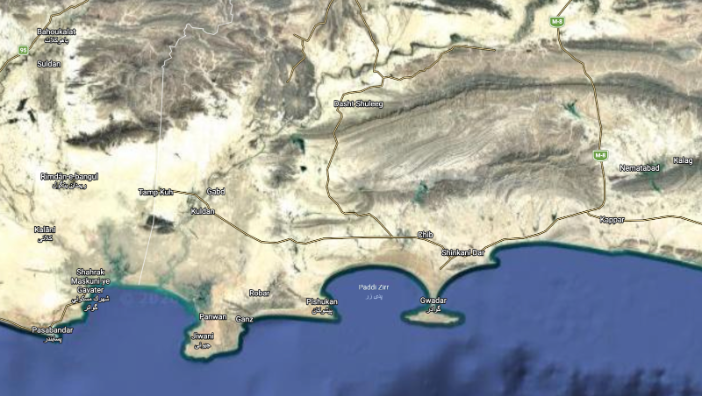
Gwadar is a naval port and an air base located at the western edge of the Pakistani coast in the Province of Baluchistan, about 400 kilometres east of the Strait of Hormuz. Though the potential of the port had long been acknowledged, the remoteness of the area as well as the unstable political conditions in Baluchistan had prevented the development of the area. Pakistan finally began developing the port in the early 2000s and it was subsequently developed further with China’s assistance. It forms a critical part of the China-Pakistan Economic Corridor (CPEC), a flagship project of the Belt and Road Initiative (BRI).
Irrespective of the commercial returns of the Gwadar port, China appears to be making a strategic investment, and it fits with the expanding goals of China in terms of maritime and port investments. Analysts citing recent reports note that China is exploring dual-use facilities and 'at the top of its wish list would be permanent, secure military installations with support, logistics and repair infrastructure. The ports themselves would be deep water and secure; in countries with which China enjoys good relations; and ideally near strategic choke points.' Gwadar is an ideal facility from this point of view, meeting all of the factors China has identified.
Given the growing trade, energy and security interests well beyond its immediate waters, China’s appeal for dual-use facilities sounds logical and Chinese analysts are categorically clear that "wherever Chinese interests go, our security boundary must also go." Other analysts commenting on China’s dual-use ports and facilities say that "commercial port facilities enable considerable military logistics and intelligence capabilities in peacetime. In addition, the global scale and distribution of PRC firms’ network of ports abroad establish a degree of Party-state control over China's commercial and military supply chains."
Gwadar
Source: Google Maps
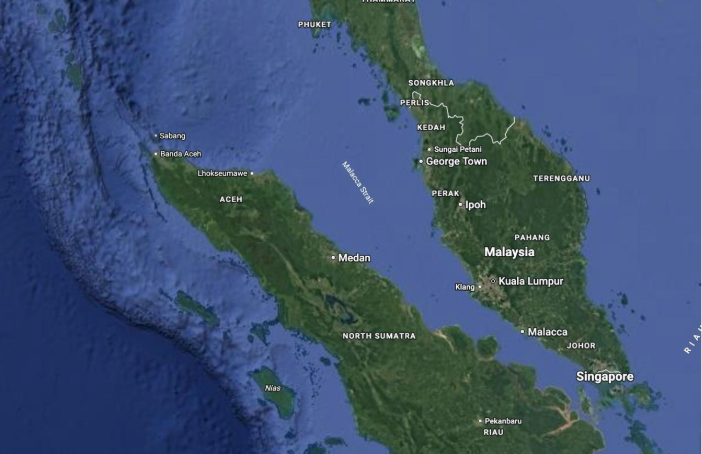
CPEC is thought to provide a partial answer to what is sometime referred to as what is referred to as China’s Malacca Dilemma—the possibility that a power hostile to China will shut down the Malacca Straits in times of crisis, thus cutting off a vital trade and energy link for China. The Gwadar port links China directly to the Arabian Sea through the Karakoram Highway coming down from Kashgar in China’s western Xinjiang Uyghur Autonomous Region. However, there are several problems with the CPEC. Most seriously, Baluchistan has remained an unstable and rebellious province, thus putting at risk the highway linking Gwadar to China that runs through the province. These disturbances have also led to targeting, kidnapping and killing of Chinese personnel engaged in the construction of facilities at Gwadar. In addition, CPEC itself runs through disputed territory in the Kashmir region, which is claimed by India. These difficulties have prevented Gwadar from being exploited to its fullest.
Malacca Strait
Source: Google Maps
Gwadar port itself is owned by the Gwadar Port Authority, which is a Pakistani government department, but the port is actually managed and operated by China Overseas Port Holdings Company (COPHC). COPHC took over the operations from the Port of Singapore Authority in 2013, and it holds a 43-year lease over the port, with most of the revenue going to the company rather than to Pakistan.
Gwadar is a dual-use facility with a deep-sea port that can accommodate Chinese warships and an international airport that has a very long runway. Gwadar can handle large Chinese naval vessels such as the Type-075 amphibious-assault ship, the Type 071 Landing platform dock. Though the port itself is operated by a Chinese state-owned firm, no formal Chinese naval base has been established yet. However, China handed over two patrol ships—PMSS Hingol and PMSS Basol—to Pakistan in 2017 for maintaining security of the port. Most Chinese warships appear to favour Karachi port rather than Gwadar port when they visit Pakistan.
The new international airport in Gwadar is also noteworthy. It was constructed largely by Chinese firms including China Railway Beijing Engineering Group. The airport features a 12,000-foot runway and can handle 400,000 passengers annually though it has largely been empty. The airport has been built at a cost of more than US$200 million and was opened in late 2024. The airport runway is long enough to land large military transport planes or long-range bombers, raising uneasiness about China’s long-term goals for Gwadar. Neither the seaport nor the airport makes much commercial sense, which increase the suspicion that they are primarily meant for strategic purposes.
China’s Indian Ocean port investments such as in Gwadar have not been commercially viable and are seen as financial failures from a pure commercial sense. But for China, these are long-term strategic investment rather than of commercial value, with the port potentially serving as secure energy and trade corridor as well to counter India’s influence. In the context of the current Iran conflict, Gwadar is reported to have picked up some traffic because of the Strait of Hormuz blockade, but the long-term viability is not clear.
Jiwani Naval Base, Pakistan
Jiwani port lies on a peninsula around 60 km to the west of Gwadar, 20 km from the Iranian border. Unconfirmed reports suggest that its expansion into a joint China-Pakistan naval and air base is at least under consideration. Together with Gwadar, a new base in Jiwani could situate Chinese military 'at the mouth of two strategically vital international waterways', which could provide China with means to exercise its anti-access and area denial strategy against adversaries. A few news reports in 2018 claimed that China was acquiring a second foreign naval base at Jiwani in the Baluchistan Province, after establishing its first overseas naval base in Djibouti. This has given way to new anxieties about China’s long-term strategic goals for the Indian Ocean. The base was planned to be developed further as a naval base with an airstrip. Jiwani is an ideal location in light of China’s goals for extensive presence in the Indian Ocean including the Arabian Sea, Bay of Bengal and major international maritime choke points.
According to The Washington Times , Chinese and Pakistani military officers met in December 2017 to firm up the details of the base. These allegedly included plans for the small Pakistani naval base to be expanded, and the air base upgraded for the PLA Air Force or PLA naval aviation operations. Both would involve relocating a large number of the residents to other areas within Jiwani or in the Baluch Province. A specific advantage of having a separate naval base in Jiwani comes from the fact that they can keep the Chinese naval forces separated from the commercial shipping facility in Gwadar.
Jiwani Naval Base
Source: Google Maps
The state of this facility is unclear. Though China has officially denied the reports about a base at Jiwani, a Chinese military analyst, Zhou Chenming, stated that "China needs to set up another base in Gwadar for its warships because Gwadar is now a civilian port… It’s a common practice to have separate facilities for warships and merchant vessels because of their different operations." Another Chinese analyst, Lin Minwang, a professor at Fudan University’s Centre for South Asian Studies, took a slightly more nuanced position, saying that China and Pakistan "have the ability to build a joint naval and air facility in Pakistan, but it is unnecessary at this time." Nevertheless, the analyst also added that should the US and its allies push an aggressive Indo-Pacific strategy, "China will surely carry out a plan with Pakistan to ensure the security of sea routes."
Thus, though Jiwani is not yet a formal Chinese external military base, it is clearly of interest to China and it bears watching. Given the location of the base and China’s goals for extensive presence in the Indian Ocean including the Arabian Sea, Bay of Bengal and major international maritime choke points, China could be expected to proceed with this base possibly at a later date.
Hambantota, Sri Lanka
Given the strategically vital location of Hambantota port in Sri Lanka, China has had a particular interest in it. It could be beneficial to China in establishing a presence in the Indian Ocean but also its location close to India is another attraction. In the early 2000s, there was interest in revamping the port to bring out its full potential, but there was not sufficient domestic interest or finance for such ambitions. Meanwhile, foreign investors were willing to explore the possibility of investing in the port, which led to multiple feasibility studies. However, none of them could reach a deal with the Sri Lankan political leadership in working out the modalities of the port development. In 2005, the Mahinda Rajapaksa government reached out to India and the US but both declined for lack of economic viability of such a port. At this stage, China Harbour Engineering Group (CHEG) expressed interest in the project and was selected by the Sri Lankan leadership to develop the project.
President Mahinda Rajapaksa was particularly interested in the project given that Hambantota was in his political constituency and therefore he had a political stake in developing the entire Hambantota township including the port. Rajapaksa was seen to be pushing Hambantota to emerge as a major hub potentially competing with Singapore even as the economic case for it was lacking. This led to the upscaling the project from a basic industrial harbour development plan to a multi-phase deep-sea port project, financed by the EXIM Bank of China. There was suspicion of corruption too because there was no open bidding process in the entire development plan. Lack of transparency has been a trademark of many of the Chinese infrastructure initiatives across several continents.
The Hambantota port opened in 2010, with China having funded 85% of the estimated total cost of US $361 million. For the first several years, the port failed to generate any revenue. Given the lack of economic viability of the project and Sri Lanka’s inability to make debt repayments, in 2017 Sri Lanka and China signed a lease agreement, handing China Merchants Port Holdings 85% ownership and operational control of the Hambantota International Port for US$ 1.2 billion. Despite the fact it was Sri Lanka that invited China to invest in the project, the 99-year lease of Hambantota became an early demonstration of the Chinese debt-trap diplomacy.
In the last couple of years, the port appears to be making some impressive progress, although it is difficult to predict the long-term economic viability to compete with Singapore and other key ports in the Indian Ocean. In 2025, Hambantota is reported to have handled 8.24 million metric tonnes of cargo, an increase from 3.0 million metric tonnes in 2024, due to the considerable growth in container, RORO, and bulk cargo segments especially in the context of unstable trade flows, supply chain realignments, congestion issues, and mounting global operating costs.
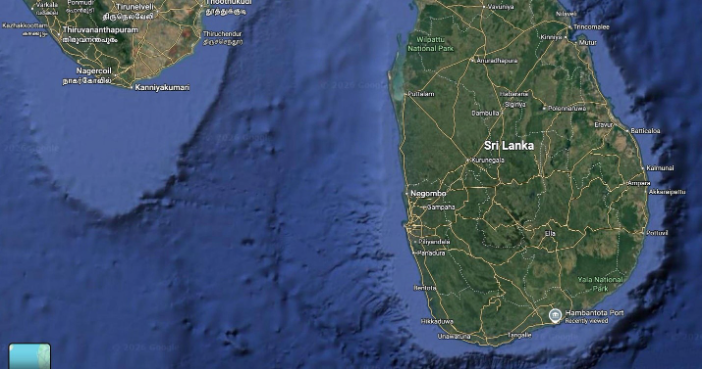
Hambantota Port
Source: Google Maps
Beyond the financial implications, there are long-term strategic consequences of China’s port lease arrangement. Considering the location of the port, at the intersection of major shipping lines, India, US and other major Indo-Pacific powers have concerns about China’s control of the port. For India, the fact that the port could in future be used as a maritime base for the Chinese navy is threatening to India’s security. Sri Lanka has reiterated that the port will not be used for military purposes, but India remains suspicious of China’s ability to undertake dual-use operations from the port. As the crow flies, the Hambantota port is barely 750 kms away from Chennai, one of India’s major metropolises, making it an excellent facility for intelligence and surveillance activities. Even though Sri Lanka has complete security control of the port, a long lease can have a coercive impact on Sri Lanka, which could facilitate China gaining a much firmer foothold over the port.